‘My Mother’ is one of the rare recent series that dares to move beyond predictable melodramas and explore deeper layers of Iranian social psychology. Beneath a calm surface, the story reveals hidden tensions that shape the characters’ destinies.
Director Javad Afshar creates a world where the central figure is not a heroic man or ambitious youth, but a middle‑aged woman whose painful past begins to reappear.
Mother at the Center
The title changed from ‘Immortal Kindness’ to ‘My Mother’.
This was not just a poetic choice, but the core idea of the series. In the creators’ view, the mother is not just a character; she symbolizes patience, sacrifice, and a life shaped by cultural expectations.
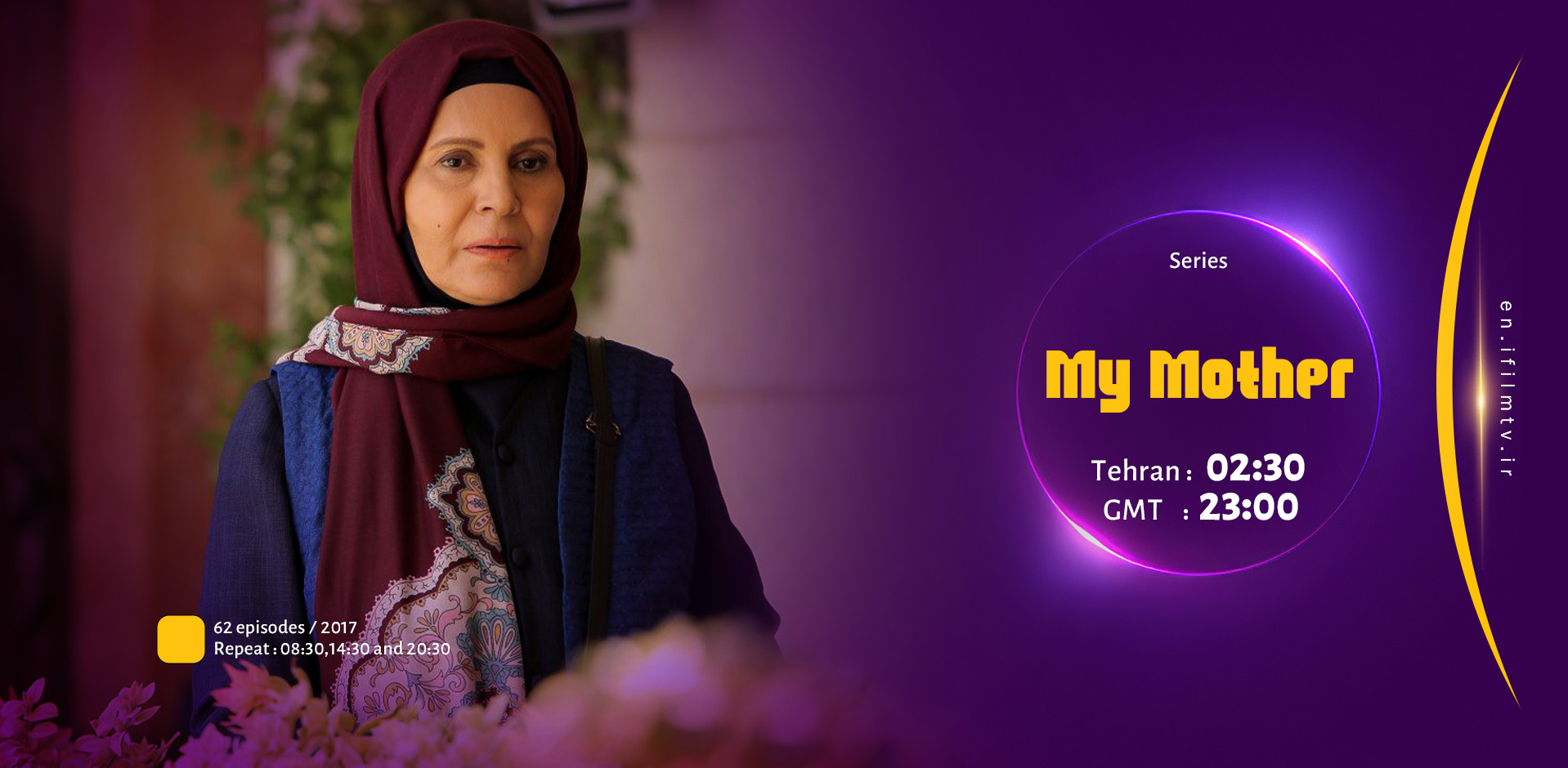
Maral (played subtly and naturally by Golchehreh Sajjadiyeh) is not exaggerated or unreal. She represents women who must balance personal desires with cultural rules and sometimes pay the price for decisions made long ago.
In Iranian culture, mothers are deeply respected but not always truly understood. ‘My Mother’ breaks this pattern by bringing the mother from the symbolic background into the center of the narrative.
She must pay for choices others made, hide her identity, and even work as a simple laborer just to spend a little more time with her daughter.
This tension between her strong inner world and her humiliating social position is one of the most painful parts of the story and a key reason viewers connected with her.
Tradition as the Background
Beyond motherhood, the series shows a society caught between old traditions and modern life. The story unfolds mostly in an Azerbaijani village, where beautiful landscapes mix with strict cultural norms.
Afshar treats this geography almost like a character: mountains, old houses, village life, and the contrast with modern Tehran all reflect an ongoing struggle between tradition and modernity.
In this environment, a young woman like Maral has no right to choose her future. Love is not her right. Choice is not her right.
Even the truth is not her right. ‘My Mother’ shows, without slogans, that many problems faced by the younger generation come from certain traditional beliefs that complicate relationships between generations.
Consequences and Delayed Justice
One of the most powerful themes is consequences. In Persian literature and mysticism, this idea is very important: every action has a result.
In the story, Arzou’s father made a wrong decision years ago, separating a child from her mother and believed time would bury the truth. But in 'My Mother' time is not kind; it exposes everything. Wrong actions lie like embers hidden under the ash, waiting to flare up.
This belief that everyone ultimately reaps what they sow sets ‘My Mother’ apart from many other melodramas.
Consequences are not a sub-theme here; they drive the entire plot. Every character, whether they realize it or not, has planted seeds in the past and now it’s time to face the music.
Strong Female Characters
A major strength of the series is its strong female characters. They are not clichés, not purely victims or saints, but complex and influential people.
From Maral to Arzou and other women in the family, each has agency and impact. Unlike many TV series, women drive the story instead of merely reacting to it.
Director Afshar has shown before (like in ‘Kimia’ series) that he understands female‑centered storytelling. Here too, he highlights women’s emotional, social, and psychological ties.
Writing and Performances
Although the script by Amir‑Abbas Payam sometimes slows down, it is generally well‑structured. He knows how to reveal secrets slowly and create tension step by step. This prevents the series from becoming overly dramatic.
The acting - especially Sajjadiyeh’s quiet strength, Qolikhani’s sharpness, and Mahin‑Torabi’s controlled performance - adds depth. Supporting actors like Sirous Gorjestani, Abdolreza Akbari, and Majid Vasheqani make the secondary layers of the story solid.
The end song, ‘Gerdab’ (Whirlpool) by Ehsan Khajehamiri, also enhances the emotional weight of the series.
Iranian television has tried in recent years to balance different audience tastes. Shows like ‘My Mother’ remind us that there is still space for serious, female‑centered dramas rooted in Iranian culture and moral questions.
These works are neither shallow nor preachy; they engage with real social issues.
‘My Mother’ is more than a series; it is a warning: no truth stays hidden forever, no wound disappears without a trace, and no mother can forever carry the burden of others’ mistakes.
Though not perfect, it is a valuable attempt to portray the real emotional world of Iranian women.
For a society that values family and morality, ‘My Mother’ is a mirror that may be painful to look at, but impossible to ignore.
Based on a Persian article by Siavash Mirzaee for iFilm website. Translated excerpts only.